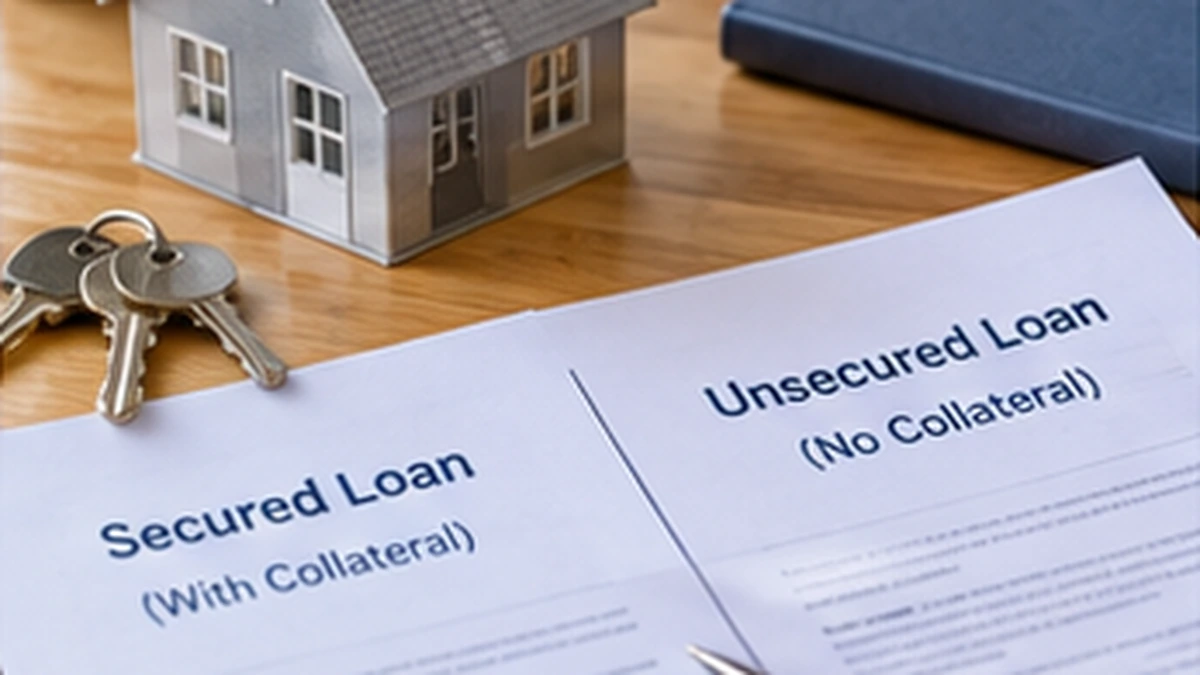
Secured vs unsecured loans is easier to understand when borrowing is treated as a future payment obligation rather than as free access to money. Every loan creates a cost, a schedule, and a set of consequences if payments become difficult. This guide explains secured vs unsecured loans in practical consumer language.
Some examples and sources are U.S.-focused because they use CFPB, FTC, or Federal Student Aid guidance. Borrowers in other countries should verify local lending rules, disclosures, licensing, collection rights, and consumer protections with the appropriate regulator before making a decision. Review checkpoint 1 for secured vs unsecured loans.
Secured vs unsecured loans begins with collateral
A secured loan uses property or another asset as collateral. If the borrower does not repay, the lender may be able to take the collateral under the contract and applicable law.
For secured vs unsecured loans, apply this point to a real offer or current borrowing need. Write down the exact number, term, lender statement, or budget effect involved. This makes the decision easier to compare and prevents a general rule from replacing the actual contract. Review checkpoint 7 for secured vs unsecured loans.
Mortgages and auto loans are common secured loans
Homes and vehicles commonly secure the debt used to buy them. The collateral gives the lender a claim against an asset if the loan defaults.
For secured vs unsecured loans, apply this point to a real offer or current borrowing need. Write down the exact number, term, lender statement, or budget effect involved. This makes the decision easier to compare and prevents a general rule from replacing the actual contract. Review checkpoint 8 for secured vs unsecured loans.
Unsecured loans do not pledge an asset
An unsecured loan relies more heavily on the borrower’s promise, credit profile, income, and other underwriting information rather than on specific collateral.
For secured vs unsecured loans, apply this point to a real offer or current borrowing need. Write down the exact number, term, lender statement, or budget effect involved. This makes the decision easier to compare and prevents a general rule from replacing the actual contract. Review checkpoint 9 for secured vs unsecured loans.
Unsecured does not mean consequence-free
Missing unsecured-loan payments can still lead to collection, negative credit reporting, lawsuits where allowed, and other consequences even though no specific asset was pledged.
For secured vs unsecured loans, apply this point to a real offer or current borrowing need. Write down the exact number, term, lender statement, or budget effect involved. This makes the decision easier to compare and prevents a general rule from replacing the actual contract. Review checkpoint 10 for secured vs unsecured loans.
Collateral changes household risk
The lower rate on a secured loan may come with the possibility of losing an essential asset. A home or vehicle can be more important to financial stability than the interest savings.
For secured vs unsecured loans, apply this point to a real offer or current borrowing need. Write down the exact number, term, lender statement, or budget effect involved. This makes the decision easier to compare and prevents a general rule from replacing the actual contract. Review checkpoint 11 for secured vs unsecured loans.
Approval standards can differ
Because collateral can reduce lender risk, secured and unsecured products can use different underwriting rules. The best offer depends on both cost and what the borrower puts at risk.
For secured vs unsecured loans, apply this point to a real offer or current borrowing need. Write down the exact number, term, lender statement, or budget effect involved. This makes the decision easier to compare and prevents a general rule from replacing the actual contract. Review checkpoint 12 for secured vs unsecured loans.
Asset value can change
A car or other asset can fall in value faster than the loan balance. If collateral is sold after default, a remaining deficiency may still be owed in some situations.
For secured vs unsecured loans, apply this point to a real offer or current borrowing need. Write down the exact number, term, lender statement, or budget effect involved. This makes the decision easier to compare and prevents a general rule from replacing the actual contract. Review checkpoint 13 for secured vs unsecured loans.
The purpose of borrowing should fit the risk
Using an essential asset as collateral for a nonessential purchase can create a large downside. Borrowers should connect the loan purpose to the consequences of default.
For secured vs unsecured loans, apply this point to a real offer or current borrowing need. Write down the exact number, term, lender statement, or budget effect involved. This makes the decision easier to compare and prevents a general rule from replacing the actual contract. Review checkpoint 14 for secured vs unsecured loans.
Loan documents explain default rights
Read how default is defined, when the lender can act, what notices apply, and whether a balance can remain after collateral is sold.
For secured vs unsecured loans, apply this point to a real offer or current borrowing need. Write down the exact number, term, lender statement, or budget effect involved. This makes the decision easier to compare and prevents a general rule from replacing the actual contract. Review checkpoint 15 for secured vs unsecured loans.
The cheaper loan can still be the riskier loan
A lower APR is useful, but cost should not be evaluated without considering the collateral and the financial damage caused by losing it.
For secured vs unsecured loans, apply this point to a real offer or current borrowing need. Write down the exact number, term, lender statement, or budget effect involved. This makes the decision easier to compare and prevents a general rule from replacing the actual contract. Review checkpoint 16 for secured vs unsecured loans.
A deeper affordability check for secured vs unsecured loans
Before accepting the loan, calculate the cash received, monthly payment, total payments, APR, fees, and amount still available for essential expenses after the payment. Then model one difficult month with lower income or an unexpected expense. A borrowing plan that fails after one ordinary setback may be too aggressive even if the lender approves it. Review checkpoint 2 for secured vs unsecured loans.
Also compare the loan with the option of borrowing less, delaying the purchase, choosing a cheaper asset, negotiating a payment plan, or using another legitimate source of funds. The purpose is not to avoid all borrowing; it is to make sure secured vs unsecured loans solves the original problem without creating a larger one.
A realistic borrowing example
A borrower sees an offer with a monthly payment that appears manageable. After reviewing the APR, fees, term, total payments, and one month of reduced income, the borrower discovers that a smaller amount or shorter list of financed add-ons creates a more resilient budget. The example shows why secured vs unsecured loans should be evaluated with both the written loan terms and the household budget.
Connect this guide to the rest of the loan site
Read how loans work for a related borrowing concept, and use personal installment loan when the second topic helps you evaluate cost, risk, repayment, or lender safety.
These two internal links connect the first Loan batch so readers can move between loan types, costs, affordability, repayment, and safety without creating isolated articles.
A seven-day review plan for secured vs unsecured loans
Day 1: define the exact borrowing need and amount. Day 2: collect the written loan terms or disclosure. Day 3: compare APR, fees, payment, and term. Day 4: add the payment to the real monthly budget. Day 5: verify collateral or lender safety where relevant. Day 6: model one income or expense shock. Day 7: decide whether to borrow, reduce the amount, compare another lender, or wait. Review checkpoint 3 for secured vs unsecured loans.
The seven-day structure is only a review framework. A simple low-risk loan may take less time, while a mortgage, student loan, or high-cost short-term loan can justify much deeper review and professional advice.
Practical checklist
- Purpose of secured vs unsecured loans identified
- Principal and cash received confirmed
- Interest rate and APR compared correctly
- Fees and optional add-ons reviewed
- Payment and term tested in the monthly budget
- Collateral risk understood where applicable
- Lender or servicer verified when needed
- Plan for difficult payments considered before borrowing
Use the checklist to identify the weakest part of your understanding of secured vs unsecured loans. One unresolved fee, collateral term, or repayment assumption can matter more than several features you already understand.
Frequently Asked Questions
Is a lower monthly payment always better?
No. A lower payment can result from a longer term, which may increase total interest and keep the debt active longer. Compare both payment and total cost.
Should I focus on interest rate or APR?
Both matter. Interest rate is the charge for borrowing, while APR is a broader comparison measure that can include certain fees. Compare like with like across offers.
Does loan approval mean the loan is affordable?
No. Approval is a lender decision. Affordability depends on the household budget, income stability, essential expenses, savings, and the amount of risk the borrower can carry.
Where should I verify local lending rules?
Use the government or financial regulator responsible for lending in your jurisdiction. U.S. sources such as CFPB, FTC, and Federal Student Aid do not replace local rules elsewhere.
Practical review 1 for secured vs unsecured loans
Take one real disclosure or payment estimate and explain it in plain language. Identify what you receive today, what you must repay, how long repayment lasts, which fees are charged, and what event would create the greatest financial stress. This review makes secured vs unsecured loans easier to evaluate without relying on advertising language. Review checkpoint 17 for secured vs unsecured loans.
Then compare the same decision with a smaller loan, a shorter term, or another legitimate lender. Write one reason to accept the offer and one reason to decline it. If the reasons are still vague, gather more information before signing. Review checkpoint 4 for secured vs unsecured loans.
Practical review 2 for secured vs unsecured loans
Take one real disclosure or payment estimate and explain it in plain language. Identify what you receive today, what you must repay, how long repayment lasts, which fees are charged, and what event would create the greatest financial stress. This review makes secured vs unsecured loans easier to evaluate without relying on advertising language. Review checkpoint 18 for secured vs unsecured loans.
Then compare the same decision with a smaller loan, a shorter term, or another legitimate lender. Write one reason to accept the offer and one reason to decline it. If the reasons are still vague, gather more information before signing. Review checkpoint 5 for secured vs unsecured loans.
Practical review 3 for secured vs unsecured loans
Take one real disclosure or payment estimate and explain it in plain language. Identify what you receive today, what you must repay, how long repayment lasts, which fees are charged, and what event would create the greatest financial stress. This review makes secured vs unsecured loans easier to evaluate without relying on advertising language. Review checkpoint 19 for secured vs unsecured loans.
Then compare the same decision with a smaller loan, a shorter term, or another legitimate lender. Write one reason to accept the offer and one reason to decline it. If the reasons are still vague, gather more information before signing. Review checkpoint 6 for secured vs unsecured loans.
Authoritative resource to review
For an authoritative reference related to this topic, review Consumer Financial Protection Bureau – Financial Terms Glossary. Use the source for the core concept, then verify the exact lender terms and local consumer rules before borrowing.
Final perspective
Secured vs unsecured loans is not only about getting approved. A strong borrowing decision is one where the cost is understood, the payment fits the budget, the lender is legitimate, the risks are visible, and there is a realistic plan for repayment when the month does not go perfectly.
Leave a Reply